You went to the bathroom, wiped, and stopped.
Something looked different. Something felt different. And now you’re here, at 11pm, typing into a search bar because your body just did something you weren’t expecting — and you need to know what it means.
First: you’re not alone. And second: what you probably noticed is ovulation discharge — and it might be the most important sign your body gives you all month.
Let’s talk about what it is, what it looks like, and what your body is actually trying to tell you.
What Is Ovulation Discharge?
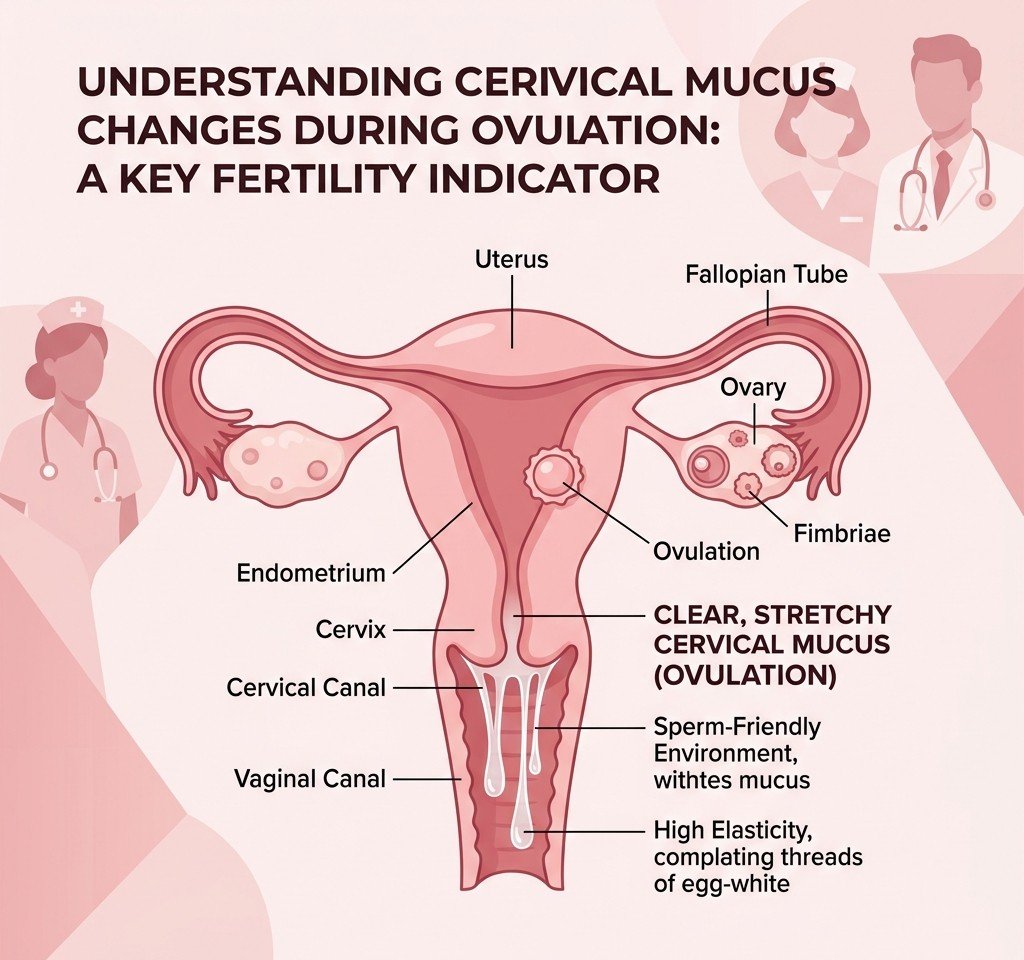
Ovulation discharge is a type of cervical mucus your body produces in the days leading up to and during ovulation. It’s made by your cervix, and it changes throughout your cycle — thicker and cloudier early on, then becoming clearer and more slippery as ovulation approaches.
It’s not a problem. It’s not an infection. It’s your body doing exactly what it’s supposed to do.
Think of it as your body’s built-in fertility signal — it literally changes its texture to help sperm travel more easily. Nature is actually kind of brilliant when you think about it.
What Does Ovulation Discharge Look Like?
This is what most people search for, and it’s worth being specific because the stages really do look and feel different.
The 4 Stages of Cervical Mucus Through Your Cycle
1. Dry / No Discharge
Right after your period, many women notice very little discharge. The cervix is closed, estrogen is low. This is a low-fertility time.
2. Sticky or Crumbly
A few days after your period, you might notice discharge that feels like paste or crumbles when you touch it. Still not the fertile window yet.
3. Creamy or Lotion-Like
Getting closer. This discharge is white or pale yellow, smooth, and looks a little like hand lotion. Fertility is rising.
4. Egg White Cervical Mucus (EWCM) — Your Fertile Window
This is the one. Clear, stretchy, slippery — it looks and feels like raw egg whites. You can stretch it between your fingers without it breaking. This is peak fertility. If you’re trying to conceive, this is your green light.
After ovulation, discharge usually becomes thick and sticky again, or dries up almost completely.
What Color Is Normal?
Color is one of the first things people notice — and panic about. Here’s a quick guide:
- Clear or slightly cloudy — Normal. This is exactly what ovulation discharge looks like.
- White — Normal, especially earlier in your cycle. Only a concern if it comes with itching or a cottage cheese texture (that can signal yeast).
- Pale yellow — Usually normal, especially if it dries yellow on underwear. Can sometimes indicate mild infection if accompanied by odor.
- Pink or light brown — This can be implantation spotting if you’re in the two-week wait. Or it can be normal mid-cycle spotting around ovulation. Worth noting in your tracker.
- Dark brown — Usually old blood clearing out. Can happen around ovulation or just after your period ends.
- Green or gray — See a doctor. This is not typical ovulation discharge and can indicate infection.
How Much Discharge Is Normal During Ovulation?
More than you might expect, actually. Some women notice a significant amount during their fertile window — enough to feel wet throughout the day or to show up noticeably on underwear. Others barely notice any at all.
Both are normal.
What matters more than volume is the consistency. That slippery, stretchy, egg-white quality is the key sign — not how much of it there is.
Ovulation Discharge vs. Arousal Fluid — Is There a Difference?
Yes, and it’s actually a great question that doesn’t get asked enough.
Arousal fluid appears quickly when you’re turned on and disappears within an hour or so. It’s thinner and doesn’t have the stretchy quality of EWCM.
Ovulation discharge is present throughout the day, doesn’t go away after arousal passes, and has that characteristic stretchy texture. It also tends to dry slightly whitish on fabric, while arousal fluid usually dries clear.
If you’re tracking fertility, check your cervical mucus before arousal to get the most accurate reading.
Ovulation Discharge vs. Early Pregnancy Discharge
This is where the two-week wait gets really cruel. Because the discharge after ovulation — if conception happened — can look similar to what comes just before your next period.
Here’s what to know:
- After ovulation, progesterone rises and discharge typically becomes thick and white or dries up.
- In early pregnancy, some women notice increased white or creamy discharge called leukorrhea. It’s thin, milky, and mild-smelling.
- The problem? Leukorrhea can also appear just before a period. The body is frustratingly ambiguous here.
If you’re in the two-week wait and you see creamy white discharge, it doesn’t confirm or rule out pregnancy. We know that’s not the answer you wanted. But it’s the honest one.
The only way to know is a pregnancy test after your missed period — or use our OvuDay ovulation calculator to track your timing and understand where you are in your cycle.
How to Check Your Cervical Mucus (Step-by-Step)
Nobody really teaches you this, which means most people figure it out alone. Here’s how to do it properly:
- Wash your hands thoroughly before and after.
- Check at the same time each day — morning is ideal, before sex or exercise.
- Use your fingers or tissue to collect a small sample from your vaginal opening (you don’t need to go far).
- Look at the color and clarity — clear vs. white vs. cloudy?
- Test the stretch — place the mucus between your thumb and index finger and slowly pull them apart. Does it stretch more than an inch without breaking? That’s EWCM.
- Record what you see — even a simple note in your phone builds a picture over time.
Doing this consistently for 2–3 cycles will give you a clear map of your own pattern. And once you know your pattern, you’ll never have to guess again.
Pair this with the OvuDay cycle tracker to pinpoint your fertile window based on both your last period and your observed mucus changes.
Can You Get Pregnant From Discharge Alone?
Discharge itself doesn’t cause pregnancy — but what it signals absolutely affects your chances. When you’re producing egg-white cervical mucus, sperm can survive inside you for up to 5 days. Outside of this window, they rarely survive more than 12–24 hours.
This is why the fertile window isn’t just “the day you ovulate” — it’s the 5 days before plus the day of ovulation itself. EWCM is usually present during those 5 days.
So while discharge isn’t the cause, noticing it is one of the most reliable ways to time intercourse when you’re trying to conceive.
What If You Have No Discharge Around Ovulation?
Some women don’t produce noticeable EWCM, and that can feel alarming when every TTC forum talks about it like it’s obvious. But reduced cervical mucus is common and can be caused by:
- Antihistamines and some cold medications
- Clomid (clomiphene citrate)
- Hormonal imbalances
- Dehydration
- Age (cervical mucus often decreases in your late 30s)
If you’re not seeing EWCM and you’re actively trying to conceive, talk to your doctor. There are also fertility-friendly lubricants (like Preseed) designed to mimic the properties of egg-white mucus.
In the meantime, use our free ovulation calculator to estimate your fertile window based on your cycle length — it’s not a replacement for mucus tracking, but it’s a solid starting point.
When Should You Worry About Discharge?
Ovulation discharge is healthy and normal. But there are signs that something else might be going on:
- Green or grayish color — possible bacterial vaginosis or STI
- Cottage cheese texture — likely yeast infection
- Strong or fishy odor — possible bacterial vaginosis
- Itching, burning, or swelling — possible yeast infection or irritation
- Unusual bleeding outside your period — worth a check, especially if recurring
If any of these apply, skip the forums and see a doctor or gynecologist. Most of these are easily treated, and catching them early matters — especially when you’re trying to conceive.
Frequently Asked Questions
Is egg white discharge a sign of ovulation?
Yes. Egg white cervical mucus (EWCM) is the most reliable physical sign that ovulation is approaching or happening. It’s clear, stretchy, and slippery — exactly like raw egg whites.
How long does ovulation discharge last?
Typically 1–5 days. The EWCM phase usually peaks just before ovulation and disappears within 24–48 hours after the egg is released.
Can ovulation discharge be white?
Yes, especially in the days before your fertile window. True EWCM is usually clear to very pale, but some women notice a whitish version that’s still stretchy and slippery — this can still indicate fertility.
Does everyone get egg white discharge?
No. Some women produce very little cervical mucus, and some don’t notice a clear EWCM phase at all. This doesn’t necessarily mean you’re not ovulating — just that mucus production varies.
Can I be fertile without egg white discharge?
Yes. Cervical mucus is one fertility sign, not the only one. Ovulation predictor kits (OPKs), basal body temperature charting, and cycle tracking apps can all help fill the gaps.
The Bottom Line
Your body has been trying to talk to you. Every month, through texture and color and sensation, it leaves clues. You just needed someone to hand you the translation.
Ovulation discharge — especially that egg white, stretchy kind — is your body waving a flag: this is your window. Whether you’re trying to conceive, trying to avoid pregnancy naturally, or just trying to understand what’s happening in your own body, this is information worth having.
Start tracking it alongside your cycle dates. Give it two or three months. You’ll start to see your own pattern emerge — and that pattern is more powerful than any app or algorithm.
If you’re ready to start, use our free OvuDay ovulation calculator to map out your current cycle and predict your next fertile window. It takes 30 seconds, and it stays completely private.
Your body already knows. Now you do too.